
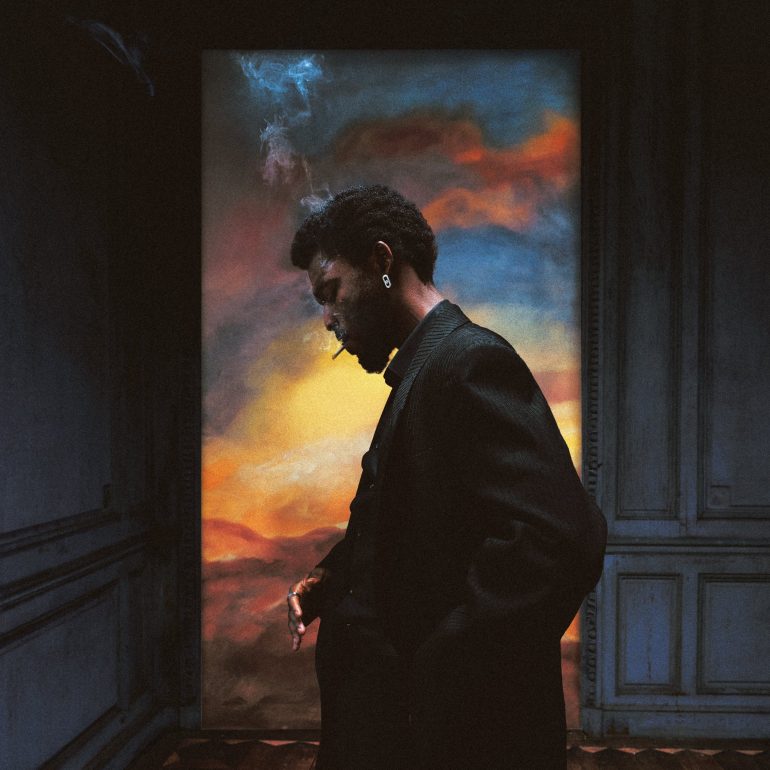
The Album That Almost Wasn’t
Four years between albums is a long time in Afrobeats, and Stanley Omah Didia spent most of them watching his plans collapse. The follow-up to Boy Alone was supposed to take a new direction entirely. On the Zach Sang Show in 2024, Omah Lay explained that he had shared an unreleased sound with a fellow artist he trusted, and that artist dropped an album five months later using the same idea. He trashed the original sessions and started from nothing. Clarity of Mind is what survived that reset.
Speaking to Apple Music’s Africa Now Radio, he explained the period that followed: “I decided to chill for a minute, take care of myself, take care of my family, put my mind back in the right space. It feels like I’ve just been inside doing all this healing, all this self-growth, and I looked at a bunch of records that I made during this time, and I’m like, yeah, this is clarity of mind.”
That statement alone tells you everything about the album’s emotional register. This is not a project scrambled together to fill a release window. It is the documented result of a man sitting with himself long enough to understand what he found there.
Inside Clarity of Mind
Clarity of Mind is a 12-track project and a profound exploration of self-awareness and emotional recovery. Known for his purple sound, a blend of melancholic Afrobeats and vulnerable songwriting, Omah Lay uses this album to transition from the darkness of his previous work into a more grounded, clear-headed state. The album features a lean list of collaborators, prioritizing Omah Lay’s solo narrative. The sole feature, Elmah on “Coping Mechanism,” stands out as a sonic and emotional highlight.
Producer Tempoe, who shaped much of Boy Alone, produced or co-produced seven of the twelve tracks here, giving the album a steady mid-tempo bed that suits Omah Lay’s delivery.
The Numbers speak for themselves
On Spotify, Clarity of Mind recorded 4.86 million streams in its very first full day of release. That is not the number of a cult artist appealing to a niche audience. That is the number of a mainstream force whose audience was ready, primed, and waiting.
On Apple Music, the album did not merely chart. It dominated. Clarity of Mind topped the Apple Music charts in 91 countries, reaching number one in 13 nations spread across the African continent, including Nigeria, Ghana, Uganda, Tanzania, Rwanda, Cameroon, Zambia, Zimbabwe, Malawi, Sierra Leone, Liberia, Gambia, and Benin. That kind of geographic sweep is a testament to how deeply Omah Lay’s sound resonates across different African cultures, not just his home market.
On the Apple Music Nigeria Top 10 Songs chart, Clarity of Mind did not just make an appearance. It took over. Eight of the top ten spots on day one belonged to the album, with “Artificial Happiness,” “Don’t Love Me,” “I Am,” “Jah Jah Knows,” and “Canada Breeze” occupying the top five positions, and “Water Spirit,” “Coping Mechanism,” and “Waist” filling out positions eight through ten. To occupy eight of ten slots on a national chart on release day, in one of the most competitive music markets on the continent, is an achievement that requires no further elaboration.

The album’s arrival came alongside a statement that set social media alight. Just days before release, during an interview with Nandoleaks published on April 1, 2026, Omah Lay declared: “I don’t want to brag too much, but I am the best at this… When it comes to art, like making music, I am the best of the last 20 years.”
He acknowledged only one artist he places himself alongside: Burna Boy. The statement was not framed as rivalry, but as recognition of shared artistic depth, rooted less in popularity and more in what he described simply as “art and making music.”
In isolation, it reads as bold. Against the backdrop of what Clarity of Mind has already done in its opening days, it reads differently. It reads like a man who knew exactly what he was carrying.
The project marks a new chapter where the singer is not just surviving his emotions but observing them with a newfound perspective. It is an album designed for deep listening, a well-earned reward to those who have followed his journey from “Lo Lo” to this sophisticated maturity.
Clarity of Mind is more than an album. It is a reckoning, a return, and a reminder. Omah Lay spent years in the dark, rebuilding from nothing after plans collapsed. What he built in that silence is already one of the defining projects in contemporary Nigerian music. The numbers confirm it. The music demands it.