
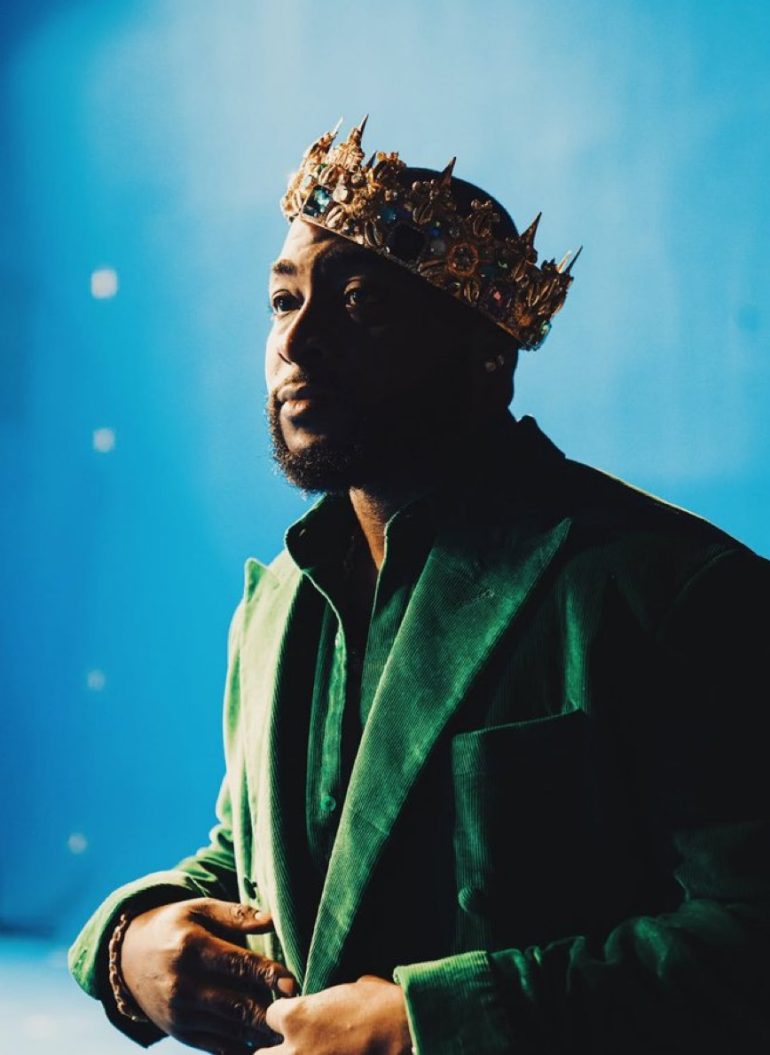

Fifteen years, six eras, and one undefeated dancefloor record, how Davido became the sound every Nigerian party answers to.
Few artists have shaped the sound of Nigerian party culture the way Davido has, and his catalog of Davido party songs tells that story better than anything else.
The Debut Years (2011–2013)
Imagine being a 9-year-old kid, playing around in the living room with your cousins, and then a song suddenly comes on, and during the course of the tune, an earworm sticks, saying “all the girls dey wash me like Omo”. It sounded really funny to my small mind back then, cause I wondered why girls would wash someone like a detergent. However, the fact that I am now 24, yet that single line from 15 years ago still rings in my ear, shows that long-ago Davido has been a force to be reckoned with in the Nigerian music scene.
The name of that tune is “Back When” featuring Naeto C, which was his debut song, released on May 7, 2011. Produced by Davido. This record did its bit in introducing who Davido was to the world, but the real showcase came later that year, on 30th October, when he dropped “Dami Duro”
This was a real case of “you were either there, or you weren’t”. Co-produced by Shizzi, this record had one major identity crisis, or should I say split personality. It could double as either a strong manifesto of a rich, highly advantaged, upcoming artist, or it could pass as a crazed party banger, which filled the airwaves with intense gyrations that no one could ever resist. Either way, the industry was put on notice here.
This braggadocious tune is what planted Davido’s footprints in the endless sands of afrobeats.
But this was merely a harbinger of what was yet to come.
“Dami Duro” was the standout of his 2012 debut album, “Omo Baba Olowo”. It was a feel-good project, arguably one of the best debut projects in Afrobeats history, it was home to more gems like “All of you”, “Ekuro”, “gbon gbon”, “overseas” featuring Sina Rambo, and “feel alright” featuring Ice Prince.
On 25th February, 2013, Davido kicked off the new year with “Gobe”, I remember this drop like it was yesterday. Produced by Shizzi, Gobe was your typical flirtatious Lagos big boy tune, it had all the minerals. Even better were the numbers and charts that came with it to tell you what magnitude of song it was. It hit No. 1 on the MTV Base Official Naija Top Ten, topping Bank W’s famous Yes/No, which dominated the love plagued airways that time, as it was Valentine’s season.
The real banger came in the middle of the year on 13th of August, when he dropped “Skelewu”, produced again by Shizzi. Here, Davido was at the peak of his powers, or so we thought. He launched a $3,000 dance competition to spark a nationwide frenzy. Long before the TikTok era, it completely took over Nigeria, forcing everyone from secondary school students to wedding guests in heavy agbadas to master its signature shoulder-rolling choreography. The track’s rollout became iconic street culture when fans fiercely rejected the original music video on Twitter, forcing Davido to re-shoot it. Ultimately, when global football stars adopted the dance, it solidified the song as a massive, unforgettable cultural victory for the streets.
This was the beginning of Davido’s cult-like following.
The 2017 Run That Changed Everything
Between 2014 and 2015, he dropped some more feel-good records like “Tchelete” featuring Mafikizolo, “Fans Mi” featuring Meek Mill, and “The money” featuring Olamide. In 2016, he dominated the summer airwaves with “Coolest Kid in Africa” featuring Nasty C
Then came what is regarded as one of the most legendary single-year runs in the history of afrobeats as we know it. 2017 is what sealed Davido as a top 3 artist in afrobeats, and it’s not just because of what he did that year, it’s because of what that year translated to, going forward. Both for him, and for the culture.
When “IF” dropped on 17th February, the entire continent was held in a chokehold. Produced and written by Tekno, this tune propelled Davido to never-before-seen heights. The reception was monumental, clubs all over the country and beyond, lounges, every single nightlife spot had it on repeat. It gave rise to the popular “30 billion for the account” earworm, which has now become a brand associated with him, as well as the name of his crew: 30 Billion Gang. The song went on to reach RIAA Gold status in the US.
Just when you thought Davido couldn’t outdo “IF” that easily, he did it with his next drop. Produced by Kiddominant, “Fall” arrived just at the beginning of the summer, on June 2nd, and the intro of this tune could already tell you that you were in for such a good time. The lyrics did not necessarily read like a party banger, but boy did no one care about that. It infiltrated every single available airway there was, no one was safe. Coming off the back of “IF”, and going on to drop this was stuff of greatness, this was the making of a legend.
Fall did not just stop in Africa, it went on to dominate the nightlife in the US, touching unprecedented heights. As a result of this mind-boggling run, it shattered boundaries as the longest-charting Nigerian pop song in Billboard history, earned Gold certifications in both the US and Canada, and made history as the first Afrobeats music video to surpass 100 million and 200 million views on YouTube.
He ended that historic run with the release of “Like Dat” on November 24th.

The Amapiano Pivot (2021–2025)
By 2021, the sound of Nigerian nightlife started shifting. Amapiano was crossing the border, and Davido, being the shrewd sound chaser he’s always been, got there early. “Ke Star” was an Amapiano smash hit by Focalistic featuring Davido, built over Virgo Deep’s heavy log drums.
On November 19, they linked up again for “Champion Sound,” produced by Caltonic SA and Tee Jay. At this point, I was already 19, and I can categorically tell you that these two records held down the party scene so much that, if played today, they’d still turn any crowd up.
The Amapiano flirtation deepened in 2023 with “Unavailable” featuring Musa Keys, released on April 11 as the second single off “Timeless.” This one wasn’t flirting anymore; it was a full relationship. Paired with a dance challenge that immediately swept through TikTok, a modern day echo of what “Skelewu” did a decade earlier, minus the physical dance off cash prize, “Unavailable” proved that whatever the trending sound was, Davido could still find a way to make it his own.
Then came the run that closed out this chapter of his career, at least for now. On October 31, 2024, he dropped “Awuke,” featuring Jamaican American dancehall act YG Marley, produced by Mikababeatz and Marvey Muzique.
A little later, on December 6, he capped the year off with “Funds,” featuring Odumodublvck and Chike, produced by Ucee and built around a sample of Brenda Fassie’s 1997 hit “Vuli Ndlela.” Both records went on to feature on his fifth studio album, “5ive,” released on April 18, 2025.
Final Note
From a 9 year old mishearing a lyric about detergent to a grown man watching Davido sample a 1997 South African classic, one thing has stayed constant across fifteen years: whenever Davido drops something, the Nigerian nightlife scene reorganizes itself around it. Fifteen years, six eras, and countless dance challenges later, I still don’t know why girls would wash someone like Omo, but I now fully understand why Davido remains undefeated on the dancefloor.