
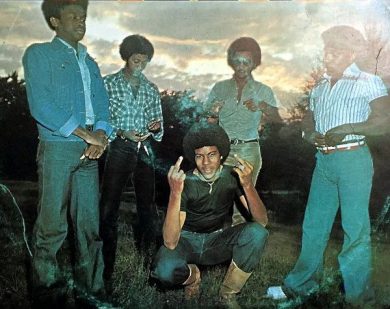

A post on X (formerly Twitter) this week about a Nigerian psychedelic rock band from the 1970s pulled in more than 238,000 views and thousands of likes, with the author wondering why nobody talks about that scene. The band at the centre of it is Ofege, and the honest answer is that Nigeria has talked about them, forgotten them, and rediscovered them more than once in the last fifty years. This is the story of five teenagers from St. Gregory’s College in Lagos who only wanted a keepsake and ended up with a legacy.
Ofege began in the classrooms and dormitories of St. Gregory’s, the Catholic boys’ school in the Obalende and Ikoyi corridor of Lagos, in the early 1970s. Two classmates, Melvin Ukachi, known to everyone as Noks, and bassist Paul Alade, spent their free periods twanging away on box guitars while other students got on with regular school life. They begged the school band for time on its amplified instruments and borrowed its drummer when they could. Then, by Ukachi’s account, a quiet classmate named Mike Meme sat down at the drums one day and played so well that Ukachi asked who he was and where he had been hiding. Keyboardist Dapo Olumide joined after Ukachi taught him the instrument, and a younger schoolmate completed the group. Before they were Ofege, they called themselves the Hitch Hykers.
The name they settled for was a piece of school rebellion. Ukachi explained that Ofege is a twist on military slang for going absent without leave, built from the Yoruba word ‘ofo’, meaning he has jumped, and the English word ‘gate’. At lights out, when the housemaster called the roll and asked about a missing boy, the dormitory would answer in unison with the name. Their label would later translate it as breaking bounds, which suits a band that broke so many.
Their ambitions at first were modest. They wanted a souvenir of their school days, a handful of copies of an album to remember each other by. One Saturday they sneaked out without permission to audition at Decca West Africa and were told to go back to school and read their books because a studio was no playground. They went back heartbroken, but the following Saturday they tried EMI Records. There they met Odion Iruoje, the label’s producer and A&R man, who was amused by the souvenir idea and heard something worth keeping. He drilled the boys through a full day until they were tight, and Ukachi has compared him to a sergeant major. After an overnight session, Iruoje put a contract on the table and told them to sign. Then came a photo shoot, and a note to come back after the long vacation.
Ukachi found out what had happened while helping out in his father’s paint shop over that vacation. He was flipping through the Daily Times when he hit a centre spread advertising an Ofege album called Try and Love. When school resumed, the boys were celebrities. The record, cut at EMI’s Lagos studio when the band averaged about 16 years old, carried eight songs, among them Nobody Fails, the instrumental Gbe Mi Lo, the title track, and the tender It’s Not Easy, credited to Alade. Whizzy Ilabo has two origin stories depending on who you ask, a classmate with wizard hair or Olumide’s famously wild dog. BLO guitarist Berkley Jones added fiery guitar solos to the sessions and kept working with the band afterwards.
The sound is what makes people stop. Ofege grew up on the guitar heroics of Carlos Santana, Jeff Beck, Jimmy Page and Led Zeppelin, and on the criss-crossing rhythms of Osibisa. At home they listened to BLO, Monomono, The Funkees and Ofo the Black Company, bands that were learning to marry Western rock with Nigerian rhythm in the wake of Fela’s towering influence. What the schoolboys added was sweetness. The harmonies are soft, the hooks are easy to carry, and the fuzz guitars sit on a backbeat that owes as much to James Brown as it does to Fela.
The albums kept coming as the members worked around exams. The Last of the Origins, recorded in 1975 and released by EMI in 1976, went deeper into psychedelia, with synthesiser from Curved Air’s Francis Monkman, Berkley Jones on guitar, and sleeve art by Yomi Osunfisan, the artist behind some of Fela’s covers. Higher Plane Breeze followed in 1977 on Polydor Nigeria, blending funk and disco with heavy guitar. Its cover gave Nigerian music one of its most recognisable images, a bandmate crouched in front of the others with both middle fingers raised. The final record, How Do You Feel, arrived in 1978 with disco and reggae seeping in, plus guest turns from Kofi Ayivor on congas, Osibisa’s Robert Bailey on keys and The Funkees’ Jake Sollo on guitar.
Then it ended. School was over, and the boys went their separate ways. Olumide went abroad, Alade stayed on for his A-levels and later settled in the United States, and the rest drifted into other careers. Music had never been meant as a livelihood. Later, EMI Nigeria itself disappeared, which left the albums without an owner to guard them and free for pirates. Ukachi tried a brief comeback in the 1980s and recorded solo, including I Am OK in 1985 under the name Ofege as One, and he sang with groups such as M.F.B. and Ozzobia. For a long stretch, though, the band existed mostly in the memories of people who had been teenagers in the seventies.
The rediscovery came from record collectors abroad. Tracks began appearing on psychedelic compilations in the 2000s, including Adieu on Soundway’s Nigeria Rock Special in 2008. Tidal Waves Music reissued the albums from 2018 with Ukachi supervising and writing the liner notes, and Strut released a fresh remaster of Try and Love in 2022 with a new interview with him. In between, It’s Not Easy closed out an episode of the vampire comedy What We Do in the Shadows in 2020, and a new generation went looking for the song. It now sits above 19 million Spotify plays, and the band draws well over a hundred thousand monthly listeners.
There is sadness in the comeback. Alade died in April 2020 in the United States, a victim of the COVID-19 pandemic. Olumide marked fifty years of friendship with a public tribute that reminded Nigerians how young these musicians had been when they changed the sound of the country.
Ofege were not alone at St. Gregory’s. Grotto, a rock and funk band from the same school, released At Last in 1977 and, unlike many studio-only student acts, played live around Lagos, including at the Shrine with Fela. Apples, another school band, was also taken on by Iruoje. The producer then chased Ofege’s success with Question Mark, whose only album, Be Nice to the People, was recorded in 1977. Behind all of them stood the first wave of Nigerian psych and funk rock: BLO, Monomono, The Funkees, Ofo the Black Company and others later gathered in Now-Again’s Wake Up You! anthologies in 2016. Today, Lagos rocker Clayrocksu and her Afrorockstars collective hold monthly Rock Nights in the city and are working to revive a scene that, in her telling, has died twice before.
So when someone online says nobody talks about this music, it is worth gently correcting them. Nigeria talked about it first, at school dances and in newspaper centre spreads. The world is only now catching up with five boys who sneaked out of class and left the gate open behind them.

Discography
Ofege released four studio albums between 1973 and 1978, all through EMI Nigeria or Polydor Nigeria.
| Album | Released | Label | Notes |
|---|---|---|---|
| Try and Love | 1973 (recorded 1972) | EMI Nigeria | Eight tracks. Berkley Jones of BLO added guitar solos. Reissued by Tidal Waves (2018, 500 copies) and Strut (2022, remastered by The Carvery with a new Melvin Ukachi interview). |
| The Last of the Origins | 1976 (recorded 1975) | EMI Nigeria | Francis Monkman of Curved Air on synthesiser, Berkley Jones on guitar, sleeve art by Yomi Osunfisan. Tidal Waves reissue on Record Store Day Black Friday 2018. |
| Higher Plane Breeze | 1977 | Polydor Nigeria | Funk and disco with heavy guitar. Cover shows a bandmate crouching with both middle fingers raised. Tidal Waves reissue, 500 copies. |
| How Do You Feel | 1978 | Polydor Nigeria | Final album. Guests Kofi Ayivor (congas), Robert Bailey of Osibisa (keys) and Jake Sollo of The Funkees (guitar). Tidal Waves first reissue. |
| I Am OK (Melvin Ukachi, as Ofege as One) | 1985 | Original release; Tidal Waves reissue 2022 | Solo album by the band’s leader. Jake Sollo produced and played synthesiser, recorded at RAS Studio. |
On compilations, Adieu appeared on Soundway’s Nigeria Rock Special (2008), one of the first records to put Ofege in front of overseas collectors.
Lineage
The strongest documented follower is Question Mark, produced by Odion Iruoje in the wake of Ofege’s success. The rest are influences, same-school peers or a modern revival, so the feature should not claim more than the record supports.
| Act | Relation to Ofege | Key record or detail |
|---|---|---|
| BLO | Local influence. Guitarist Berkley Jones played on Try and Love and The Last of the Origins. | Chapter One (1973). Berkeley Jones, Laolu Akins and Mike Odumosu formed it in late 1972. |
| Monomono | Local influence, led by Joni Haastrup. | Kenimania (1972). |
| The Funkees | Local influence. Jake Sollo guested on How Do You Feel. | Breakthrough (1974). |
| Ofo the Black Company | Local influence. | Acid rock cult act of the early 1970s. |
| Osibisa | Rhythmic influence. Robert Bailey and Kofi Ayivor, both Osibisa alumni, guested on later albums. | Ghanaian-British Afro-rock band. |
| Grotto | Same school, same era, same producer (Iruoje). Lead guitarist Soga Benson. | At Last (1977), Grotto II: Wait, No Hurry (1979). Played live with Fela at the Shrine. |
| Apples | Same St. Gregory’s band scene in the late 1970s, produced by Iruoje. | Overdubs recorded at Abbey Road with Francis Monkman. |
| Question Mark | Followed Ofege. Iruoje produced them while chasing Ofege’s success. | Be Nice to the People (1977), their only album. |
| Now-Again Records | Curators who put the era back in print. | Wake Up You! The Rise and Fall of Nigerian Rock 1972 to 1977, two volumes (2016), notes by Uchenna Ikonne. |
| Clayrocksu and Afrorockstars | Present-day Lagos Afro rock revival. No published quote yet names Ofege as an influence. |
Some sources where I found some resources on this: The Guardian Nigeria, on Paul Alade’s death and the band’s story
Archivi.ng, Ofege Made Elegant Music as Schoolboys
The Nollywood Reporter, on Clayrocksu and the Afro rock revival