
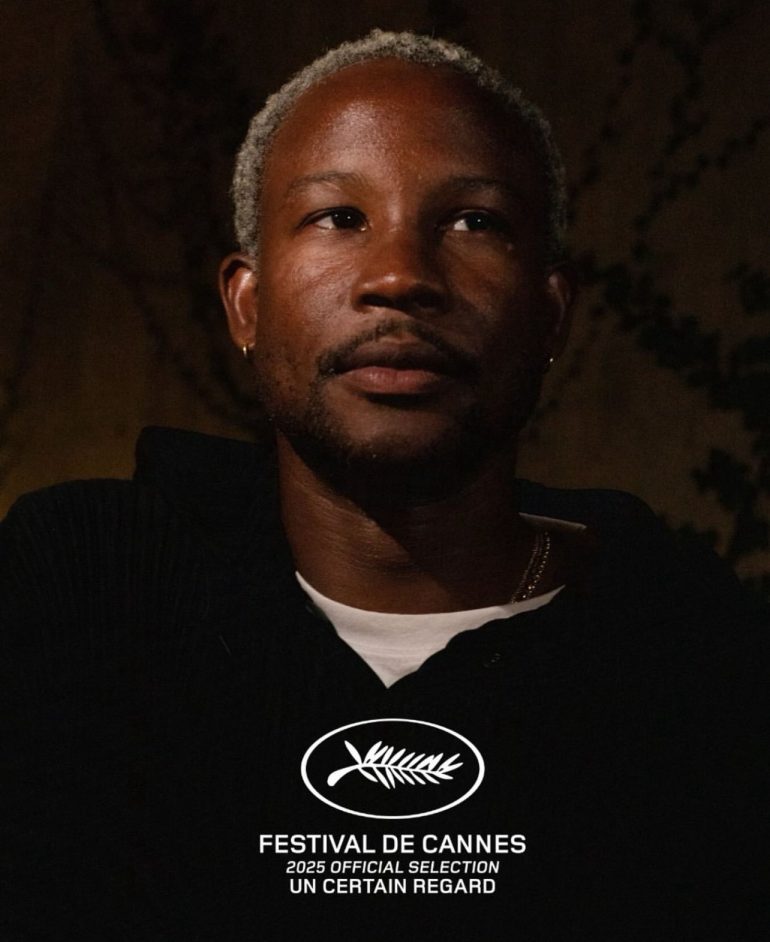

Nigerian filmmaker Akinola Davies Jr. has been invited to join the Academy of Motion Picture Arts and Sciences, the organisation responsible for voting on the Oscars. The announcement, made on June 24, places Davies among 529 artists and executives invited into the Academy’s class of 2026, a list that includes 95 Oscar nominees and 21 winners.
Davies is listed under the Short Films branch, with his credits cited as Lizard and Contactless. Those films, particularly Lizard, established him on the global stage. The 2020 short, inspired by his childhood in Nigeria, won the Grand Jury Prize for Short Film at the 2021 Sundance Film Festival and received a BAFTA nomination for Best British Short Film. His debut feature, My Father’s Shadow, built further on that momentum, earning him a BAFTA Award for Outstanding Debut, a British Independent Film Award, and a Gotham Independent Film Award.
The invitation follows the successful international run of My Father’s Shadow, produced through Fatherland Productions, the Lagos-based company Davies co-founded. The film collected awards on the festival circuit and is widely regarded as one of the most significant African films of recent years. Notably, actor Sope Dirisu, who starred in My Father’s Shadow, was also invited into the Academy’s 2026 class, making the film a double entry point into one of cinema’s most exclusive institutions.Akinola Davies Jr.: The British-Nigerian Filmmaker Rewriting the Rules of African Cinema
The weight of Academy membership extends beyond career recognition. Members vote on the Academy Awards and actively shape conversations around global cinematic excellence. For Davies, the invitation also marks a broader moment for African storytelling, bringing voices with deeper knowledge of the continent’s cultures and creative industries into a space that has historically underrepresented them.

The 2026 invitee class is 53% international, representing 60 countries and territories outside the United States, reflecting a continued push toward global diversity within the institution. Davies’ inclusion fits squarely within that direction, while carrying specific significance for Nigeria and the wider African film ecosystem.