
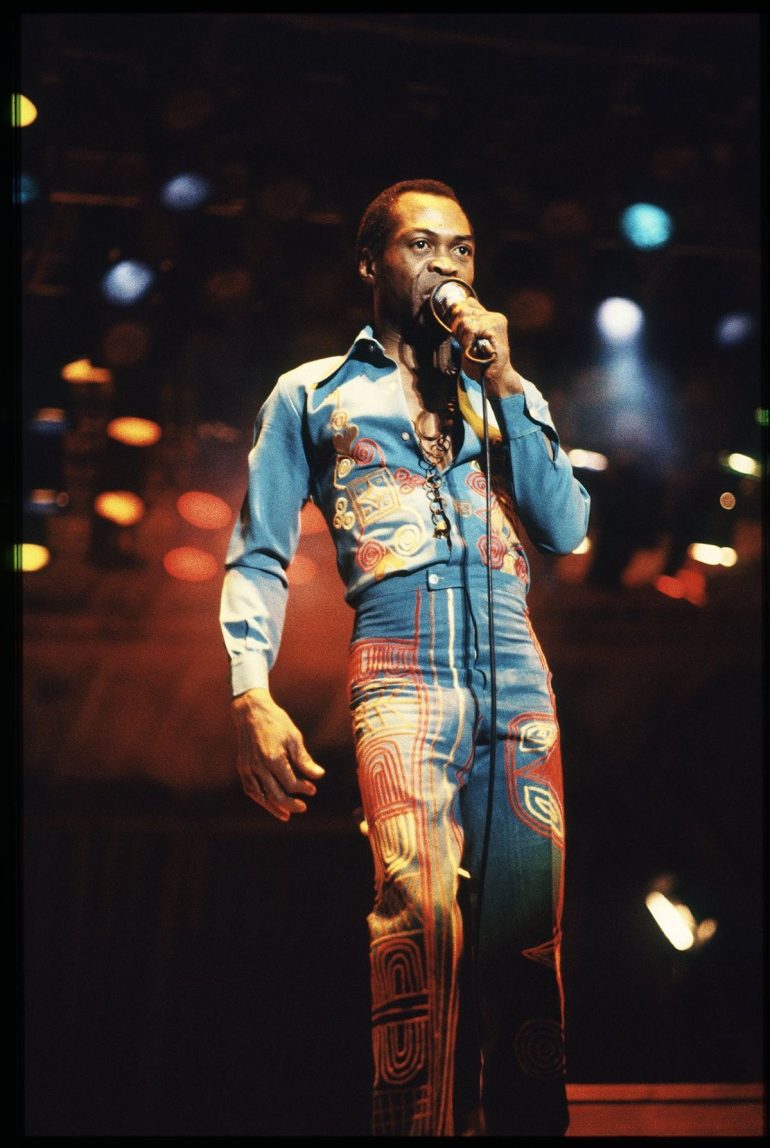

From an Abbey Road session in 1971 to a Dior campaign in 2026, the West has been borrowing Fela Kuti’s sound for more than fifty years. Here is who, where and what it tells us.
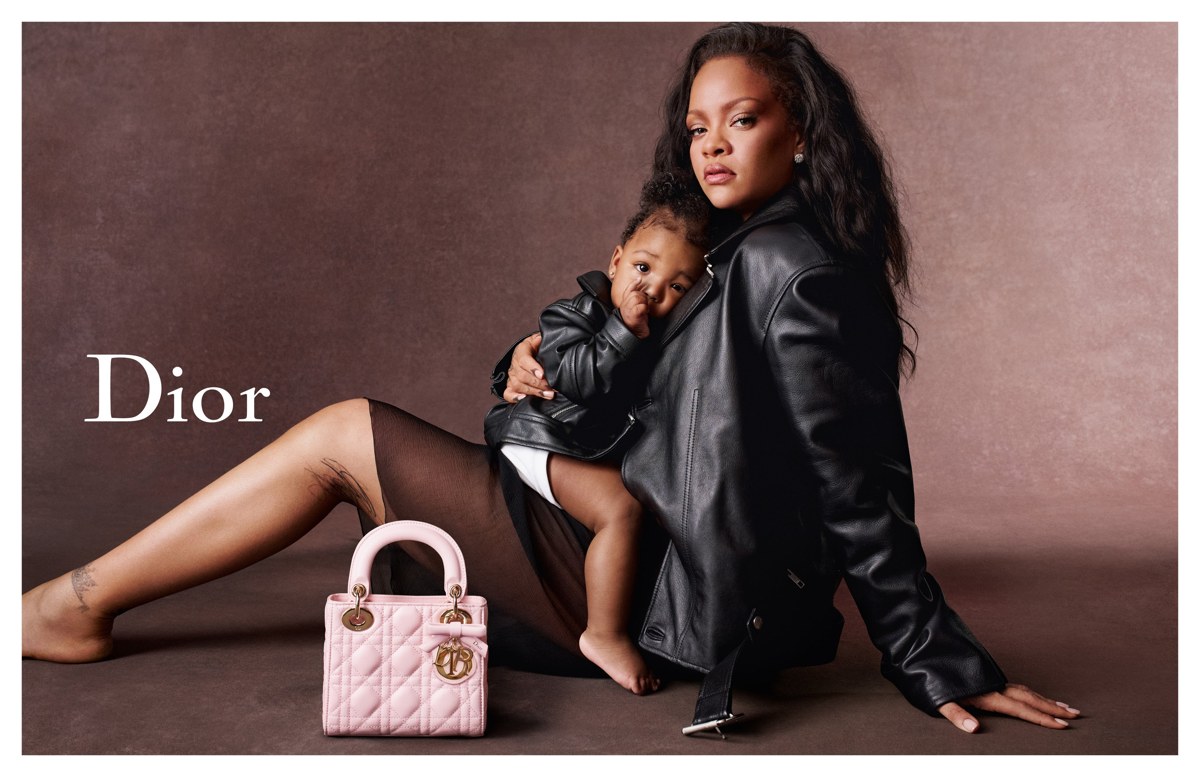
On 3 March 2026, Apple released the launch film for its M5 MacBook Air. Underneath the images ran a swaggering horn groove recorded in London in 1971: “Let’s Start”, taken from Fela’s live album with the British drummer Ginger Baker. Eight months later, on 19 November, Dior unveiled its Lady Dior 2027 campaign, starring Rihanna and her daughter Rocki. The song accompanying the film was “Lady”, from the 1972 album Shakara, with Fela credited as writer and composer.
Either side of those two dates, the institutions that decide who counts had their say. On 31 January, the Recording Academy gave Fela its Lifetime Achievement Award, reported as the first for an African artist. On 14 November, five days before the Dior campaign broke, he was inducted into the Rock and Roll Hall of Fame at the Peacock Theater in Los Angeles, receiving its Early Influence Award, after being announced as part of the 2026 class in April. Fela’s children, Femi, Yeni, Kunle and Shalewa, accepted the Grammy on his behalf.
It is tempting to read all of this as a late arrival. But it is not. The West has been borrowing from Fela since the 1970s, in studios, on stages, on screens and on runways. What follows is a sector-by-sector account of the uses that can be checked, from a London recording desk to a Paris catwalk, and an attempt to say what the borrowing tells us.
London made part of him
The first Western chapter was not a placement at all. It began with a student.
Fela went to London in 1958 to study at Trinity College of Music, and he formed the Koola Lobitos there. By the mid-1960s, he had met Ginger Baker, then one of the most famous drummers in Britain, at the Flamingo club. That friendship left its mark on some of the most licensed recordings in his catalogue.
In July 1971, Fela and Africa 70 went into Abbey Road. On 25 July they recorded Live! with Baker, in front of guests. Abbey Road’s own history says Fela cut three albums in that building across the decade: Fela’s London Scene, Afrodisiac and the Baker record. The studio credits the sessions with pushing Peter Gabriel, Brian Eno and Damon Albarn to widen what they thought a band could do. Britain also had a documentary camera on the story, in the form of Ginger Baker in Africa, made the same year, which followed the drummer to Lagos and into the recording sessions that bound the two men together.
The country then became a distribution route. Creole Records put out Zombie in Britain in 1977.
Keep the 1971 Abbey Road album in mind, because it keeps returning in this story. “Let’s Start” and “Black Man’s Cry” both come from it. A recording made in London for a tiny audience has ended up under a Netflix western and a global Apple launch. Among the placements that could be checked, it may be the most frequently licensed single source in the catalogue, though no full list of placements has been published.
The musicians got there first
Long before any brand called, other musicians were quietly taking notes.
The cleanest example is Brian Eno. By his own account, the first record he played to Talking Heads before they made Remain in Light in 1980 was a Fela record. He has named Afrodisiac, the album Fela made in London, among his favourites, and he later curated a Fela vinyl reissue box.

Hip-hop picked up the thread in the late 1990s, and it did so in fragments. Mos Def worked a sample of “Fear Not For Man” into a 1999 track. In 2001 Missy Elliott and Timbaland turned “Colonial Mentality” into the backbone of “Watcha Gonna Do”. Kendrick Lamar’s “Mortal Man”, from To Pimp a Butterfly in 2015, is built on a pitched-down drum pattern from saxophonist Houston Person’s 1977 cover of “I No Get Eye For Back”, which makes it a sample of a sample. J. Cole is credited by several outlets with flipping the saxophone line from “Gentleman” on “Let Nas Down” in 2013, although not every writer agrees that it is a formal sample.
Not every nod landed. Wyclef Jean’s 2017 song “Fela Kuti” is built on the instrumental of “Eko Ile”, Fela’s 1973 tribute to Lagos from Afrodisiac. One analysis of the record reported that many Fela devotees saw it as a late and thin tribute, and quoted a review calling the album Jean’s weakest songwriting to date.
The biggest stage came in April 2018. Beyoncé wove the trumpet line from “Zombie” into her Coachella set on 14 April, and when Netflix released Homecoming a year later, on 17 April 2019, it put images of Fela on screen. JAY-Z, who was already a producer of the Broadway musical, had put “Zombie” on his Tidal playlist of protest music in 2016. The most recent entry is a new cover of “Zombie” by Santigold, released on 12 November 2025 for Fear No Man, a twelve-part podcast from Higher Ground, the Obamas’ production company, hosted by Jad Abumrad.
On stage, he became a character
If musicians took his sound, theatre took his life.
Fela! is a jukebox musical with a book by Bill T. Jones and Jim Lewis. It opened off-Broadway in 2008, then moved to the Eugene O’Neill Theatre on Broadway, opening on 23 November 2009, and went on to collect 11 Tony nominations. Its producers included JAY-Z, Will and Jada Pinkett Smith, and Knitting Factory Entertainment, the label that now helps run Fela’s catalogue. Sahr Ngaujah played Fela.
London followed almost at once. The National Theatre staged it in the Olivier from 16 November 2010 (previews began on 6 November) and kept it running until 23 January 2011. For a time the show was playing the Olivier and Broadway together, a first for the National. Ngaujah and Jones were both nominated for 2011 Olivier Awards, and the production later moved to Sadler’s Wells for a summer run from 20 July to 28 August 2011.
The National Theatre Live broadcast carried it around the world, and Lagos got its own screening on 6 February 2011. The musical then toured the United States in 2011 and returned to Broadway in 2012.
The musical Fela! gave Western audiences an entry point that was not an album cover, and it arrived ahead of most of the placements that follow.
On screen, a shorthand for defiance
Film and television have used Fela the way a shorthand writer uses a symbol: a few bars and the audience knows someone is about to push back.

The earliest feature-film placement that checks out is also the most deliberate. In Tom McCarthy’s The Visitor (2007), a retired professor learns African drumming, and “Je’Nwi Temi (Don’t Gag Me)” is featured prominently enough to sit on the Varèse Sarabande soundtrack CD. The song is doing real narrative work, not decorating a scene.
In 2019, Queen & Slim put Burna Boy’s “My Money, My Baby” on its official soundtrack. The track is built on a sample of Fela’s “Shakara”, which makes it a new recording that carries his DNA, not a Fela master.
The loudest recent placement is The Harder They Fall (Netflix, 2021). “Let’s Start” appears in the trailer, posted on 24 June 2021, and again in the film during the fight between Trudy and Mary, played by Regina King and Zazie Beetz. IMDb credits the track to Knitting Factory and Partisan. JAY-Z co-produced the film, and The Native has argued that his long record of backing Fela projects explains the choice. A critic in ThisDay disagreed with the scene, writing that the song’s lyrics have little to do with a gunfight.
British television found him too. In the third series of Sex Education (Netflix, 17 September 2021), the Koola Lobitos recording “Oyejo” plays in episode six as Eric’s family arrive in Lagos, in a stretch of the soundtrack that also carries Wizkid, Davido, Tiwa Savage and Burna Boy. The show is a British production, so it counts as a UK placement as much as a Nigerian moment.
Then came Heart of Stone (Netflix, 11 August 2023), where “Zombie” is listed in the end credits. One soundtrack site places it on a car speaker system around the 1 hour 21 minute mark and again over a transition in Lisbon.
The newest addition has not reached cinemas yet. In the new trailer for The Thomas Crown Affair, directed by and starring Michael B. Jordan, Fela’s “Gentleman” is part of the soundtrack. The Amazon MGM Studios film follows a billionaire who steals priceless artworks while falling in love with the woman investigating him, and it opens in theatres on 5 March 2027. The Fela Kuti Instagram page shared a reel from the trailer on 12 November 2026. A trailer placement is not the same as a place in the finished film, so how far the song runs into the movie itself is still to be seen.
The serious documentary work sits beside all this. Finding Fela, Alex Gibney’s 2014 film, is partly built around the Broadway musical, and its Knitting Factory soundtrack runs to 16 tracks. In November 2020, BBC Two broadcast Fela Kuti: Father of Afrobeat in the Arena strand, a 90-minute film directed by Biyi Bandele and packed with previously unseen footage, including scenes from the Shrine.

In the ad break: Apple, Dior and Nike
Advertising is the part of this story readers ask about most, and it is also the thinnest part of the record. Three placements can be reported, and two of them are from this year.
The Apple film launched with the M5 MacBook Air on 3 March 2026. Trade coverage credits the work to TBWA\Media Arts Lab, part of the “Great Ideas Start Here” platform, and says Fela’s music runs under it. Nigerian outlets identify the track as “Let’s Start”, the 1971 recording made in London with Africa 70 and Ginger Baker. Apple has not disclosed the terms of the deal, and Nigerian press linked the placement to the Grammy honour that arrived about a month earlier.
Dior’s campaign came on 19 November. The campaign credits, as reproduced by trade outlets, name Fela Anikulapo Kuti as writer and composer, state that the recording is licensed courtesy of Partisan Records, and carry a copyright and authorisation credit for BMG Rights Management in France. The photographs are by Sam Rock under the creative direction of Jonathan Anderson. A luxury house putting a 1972 Fela song behind a Rihanna campaign is not a small thing, and it came five days after the Rock Hall ceremony.Dior Scored Rihanna’s Lady Campaign With Fela’s Song Mocking Ladies rihanna-lady-dior-fela-kuti-cover-1200
The earliest of the three is the one with the least paper behind it. In October 2017, Nike released Ronaldinho’s Message to Football, a film with Ronaldinho, Neymar Jr., Vinicius Jr., Kylian Mbappé, Mallory Pugh and Tammy Abraham. Guardian Nigeria identified the music as Fela’s 1973 “Alu Jon Jonki Jon”, playing under a 60-second spot that it said coincided with Felabration. No agency or Nike music credit has surfaced, so this one rests on a single report.
Other brand names appear in the estate’s publicity material, but no campaign, year or track could be traced for them, so they are left out here. No British advert turned up either, which may mean the market is thin or may only mean it is poorly indexed.
The choices these brands made have something in common. Apple took a 1971 live recording built on propulsion. Dior took a song named for a woman. Nike took a groove. Every one of them reached for the early 1970s.
On the runway, the image matters more than the song
Fashion borrows differently. Where advertising wants the groove, designers tend to want the face, the art and the attitude.

The most thorough example is Carhartt WIP’s collaboration, launched on 4 April 2019 for spring and summer. It was made with the Fela Anikulapo Kuti Estate, his former manager Rikki Stein and Knitting Factory Records, and the label described it as its largest music collaboration to that point. The pieces draw on the cover art of Expensive Shit (1975), lines from his lyrics and the sign that hung on the door of the New Afrika Shrine. NTS founder Femi Adeyemi recorded a radio mix to go with the launch, and a limited reissue of Live in Detroit 1986 shipped alongside the clothes.

In Paris on 1 October 2023, Casablanca framed its spring and summer 2024 show, Day of Victory, as a tribute to Fela. Seun Kuti walked the runway in a white jumpsuit with green and purple stripes. One account of the show says the music in the room was Rema’s “Addicted”, which would make it a tribute to Fela soundtracked by one of Afrobeats’ current stars, a neat picture of how the lineage works.
In October 2021, the Amsterdam streetwear label Daily Paper teamed up with the Nigerian brand Wekafore on a capsule called The Spirit Don’t Die, dedicated to Fela. Wekafore described the pieces in terms that fit the man: very punk, very psychedelic and very African at once.
The difference between fashion and advertising matters. The Carhartt project shows what an image deal can look like when it is done properly, with the estate, his former manager and the label all at the table.
Who is behind the moment
Placements do not happen by accident. Someone has to grant permission.
The rights run through three names: the Fela Anikulapo Kuti Estate, Partisan Records and Knitting Factory Records. Track-level licence request pages exist for songs such as “Zombie”, “Lady”, “Viva Nigeria” and “International Thief Thief”.
Then lay the dates side by side. The Grammy Lifetime Achievement Award on 31 January 2026. The Apple film about a month later. The Rock Hall induction on 14 November. The Dior campaign five days after that. The estate’s publicist describes Fela as the first African solo artist to be inducted into the Hall, and several outlets repeat it, though it is a claim worth attributing.
While brands seldom disclose their reasoning and the clustering could be mere chance, the timeline points to calculated readiness meeting renewed demand. A wave of placements followed the 2009 musical; the 2025 and 2026 honours sparked a second one.
For Nigerian music, the lesson may cut two ways. A heritage catalogue with an organised estate and a label partner behind it can command Apple and Dior. A catalogue without that structure, however brilliant, may be sampled quietly, credited late and licensed rarely. The question for anyone writing about Nigerian music history is how many 1970s catalogues are sitting in that second category.
The dividend: a seat in the Hall
Every placement in this piece is a licence. The two honours of 2026 are something else: a verdict.
Fela was announced as part of the Rock and Roll Hall of Fame’s 2026 class on 13 April, alongside Sade Adu, and was inducted on Saturday 14 November at the Peacock Theater in Los Angeles. He received the Early Influence Award, given posthumously, in a ceremony that outlets describe as his induction. His children, among them Seun, Yeni, Femi, Shalewa and Made, attended for their father. Reports, repeating the estate’s publicist, call him the first African solo artist to enter the Hall.

The Recording Academy had moved first. On 31 January, its Special Merit Awards gave Fela the Lifetime Achievement Award, reported as the first for an African artist, and Femi, Yeni, Kunle and Shalewa accepted it.
Set those two beside the rest of this story and a line appears. The London sessions, the Eno records, the hip-hop samples, Beyoncé’s horn line, the Broadway stage, the streaming films and the luxury campaigns are all versions of one long act of borrowing. A Hall induction and a lifetime Grammy are what the industry’s own institutions say when the borrowing has gone on so long that the source can no longer be treated as optional.
Nothing here proves that the placements caused the honours, or the reverse. But “global icon” is a phrase that gets thrown around freely, and in 2026 two of the industry’s biggest institutions did the work of saying it about a Lagos bandleader, formally and in public.
Who owns the rebel
Step back from the individual placements and a shape appears. Nearly everything in this story comes from a few years in the 1970s. The same few songs keep returning: “Let’s Start”, “Zombie”, “Lady”, “Gentleman”. Film and television use them as shorthand for defiance or momentum. Brands use them for lift. Musicians pull out a horn line or a drum feel and build something new on top.
There is an irony in that, and it is the one Fela would have spotted first. He wrote “International Thief Thief” about a multinational company, and he wrote “Zombie” about soldiers who follow orders without thinking. Today the rights to his work sit on licensing pages, and the biggest names in technology and luxury queue up to use the sound of a man who spent his life attacking power and the people who profit from it.
None of this makes the placements wrong. Money flowing to his family and his label is not a betrayal, and an estate that protects its catalogue deserves credit for doing so. What the record shows is how far the sound travels. A horn line or a drum feel built in London in 1971 can sit under a laptop launch, a luxury campaign, a Netflix western and a Kendrick Lamar record without losing its pull. The groove has been cleared for use, and it keeps finding new rooms.