
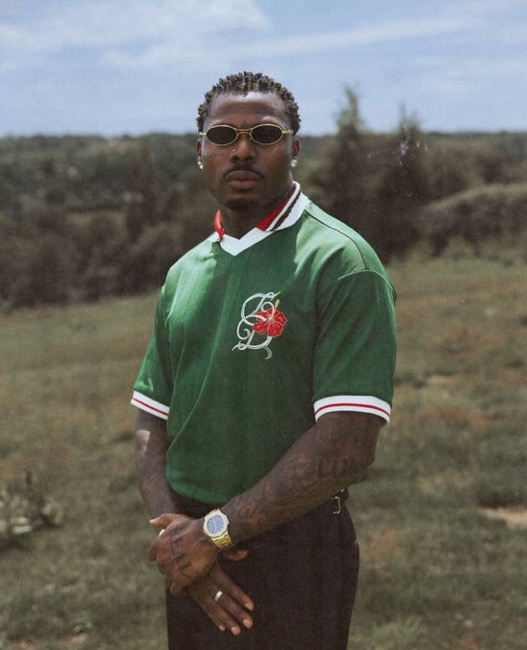

Asake has never really bothered chasing the global market on its own terms. He raps and sings almost entirely in Yoruba, by most estimates around 95 percent of his catalogue, and yet that has not stopped his music from moving through Audiomack and Spotify the way other Nigerian songs rendered in English typically do, or even better. This week brought two numbers that put that contradiction on full display.
On Audiomack, Asake has become the most streamed African artist in the platform’s history, reaching 2.55 billion streams and overtaking Seyi Vibez, who had held the record at 2.54 billion. On Spotify, he has now crossed 4 billion streams across all credits, making him only the fifth Nigerian artist ever to hit that figure on the platform.
What makes this worth sitting with is not just the size of the numbers but the language they were earned in. Afrobeats as a genre has spent years being packaged for international consumption, often with English hooks doing the work of making a song feel accessible outside Nigeria. Asake largely skipped that step. Tracks like Remember, Lonely at the Top, and Sungba lean heavily on Yoruba phrasing, proverbs, and street slang that are deeply relatable when translated or not.
Another salient reason is the emphasis on rhythm. Asake’s music, built around Magicsticks’ fusion of Fuji, amapiano log drums, and a street-pop cadence, gives listeners something to move to before they even need to know what a line means. A listener in Nairobi or Manchester does not need a translation to feel the pocket of a beat like JOHA or the sway of OBA. The language becomes texture rather than a barrier, and in some ways that unfamiliarity is part of the appeal, the same way Afrobeat’s pidgin and Yoruba-inflected chants traveled decades ago without anyone demanding subtitles.
To cap it all up, there is also the matter of consistency. Asake has released four studio albums in 6 years, plus a run of singles and collaborations, and each project has landed with enough force to keep him inside the conversation. That volume matters on a platform like Audiomack, where staying power against artists like Seyi Vibez and Burna Boy requires more than just one viral moment.

Still, the two milestones tell slightly different stories. Audiomack’s user base skews toward a younger, more Nigerian and Africa-centered audience, so topping that chart says something about home dominance. Crossing 4 billion on Spotify, a platform with a far wider global footprint, says something different: that the appetite for his sound extends well past the diaspora and into listeners who have no cultural claim to Yoruba at all.
None of this suggests language stopped mattering. It suggests the industry’s old assumption that African artists needed to sing in English to be legible to the world was always more about marketing convenience than listener behavior. Asake did not translate himself for anyone, he even gave a full spotlight interview with Spotify in Yoruba. The streams were always going to come anyway, and come they did.